
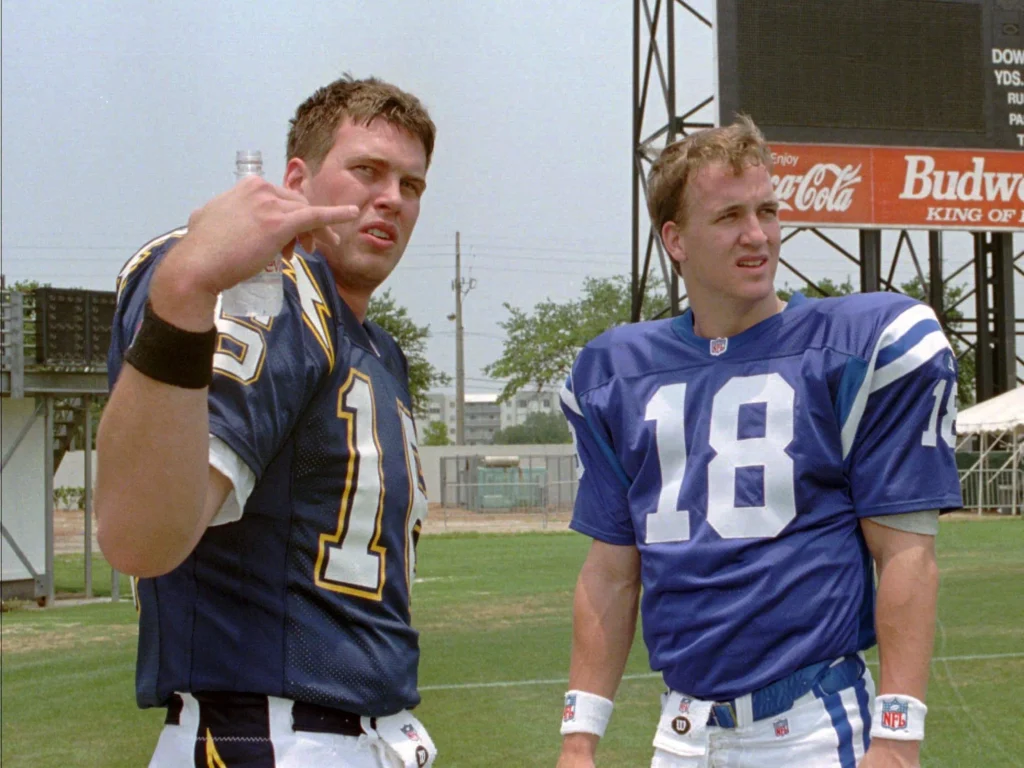
On any given Saturday or Sunday in America, for roughly 21 weeks a year, there is a scene that plays out the same way in every household: A middle-aged man or woman, perhaps someone who has consumed two or three beers, frustrated, yells at their television because they believe that they are better at calling a football game than the head coach, offensive coordinator, or defensive coordinator. This is why being a football fan is both a gift and a curse. You carry the understanding that you have more knowledge than even the most seasoned head coach, and yet you are stuck in your recliner with a Budweiser, not being given the opportunity to actually be the head coach of a team.
This belief is nearly universal and almost entirely false, and the distance between your reality, and the ability to actually coach football is something you can’t know… because you don’t know… because you’re simply a fan. You are allowed to yell at the television. You are allowed to be completely certain that the defensive coordinator is an idiot and that the guy who just dropped a slant should never have been drafted, because you would have instead drafted a better receiver from a different SEC school.
What you are not permitted to do, (if you are being intellectually honest with yourself), is confuse the yelling with expertise. The yelling is the fun part. The expertise lives somewhere else entirely, in a dark room, with a group of people whose entire job is to understand tendencies and how play calling actually works. These people watch the same clips of film with the same athletes and the same position groups, and try to gain any small edge that might allow them to be more competitive in a sport that is usually measured in tenths or hundredths of a second.
I need to offer a quick aside.
I have a close friend who spent several years in the NFL as a backup quarterback. People love to make fun of backup quarterbacks, which has always struck me as a strange impulse, roughly equivalent to making fun of the second-best cardiac surgeon in a major metro area. At his absolute floor, my friend was one of the fifty or sixty best people on the planet at a job that requires you to read the simultaneous movements of twenty-three human beings and compute it, in real time, against something you studied on film five days prior. He was a backup, and not a starter, because he lacked a couple of the physical gifts that separate the merely elite from the genuinely freakish. That is the entire reason you might only remember him as that guy you once had to start in your fantasy league because the starter got injured, and you were mildy disappointed because you lost your game by a few points.
It was never a question of whether he understood the game. He just happened to be 5’10” in a sport that demands 6’4″. He also earned tens of millions of dollars without having to suffer as many head injuries as a starter, so I’ll consider his position a win.
When his playing career ended, he became a college coach, and he is… fine. He’s not coaching at an SEC or a Big 10 program, but becoming a Division I college football coach is nothing to sneeze at.
I think we badly underrate how hard that job is, because we only ever see the four-hour window on Saturday. The football knowledge is the price of getting the job, not the job. The job is recruiting seventeen-year-olds while sitting in on their front porch, explaining why your school is the best path to the NFL. The job is being a semi-functional father figure to a roster of young men who are all convinced they are one break from being generationally wealthy. The job is managing a room full of intense personalities who each have a slightly different and very loud theory about how to win, and then getting them to run the same play anyway. He can do all of that because he earned the right to be in the room. He sat in the meetings. He took the reps. Nobody is confused about whether he belongs there.
I bring all of this up because I have started noticing the same shape in my own field, which is, broadly, artificial intelligence. And the shape is this: There are now a lot of people in the stands who have somehow been issued a headset and a clipboard.
We have entered the era of the AI fan. These are people who use Claude or ChatGPT, who can, at a hobbyist level, get a model to summarize a PDF or draft an email or spit out a Python script they will paste somewhere without reading. This is fine. This is good, even. But it has produced a Dunning-Kruger event of remarkable proportions, because the tools are so smooth and so conversational that using them competently feels indistinguishable from understanding them. A person spends a pleasant weekend getting an LLM to build a to-do app, and by Tuesday the word “expert” has found its way into their LinkedIn headline. They used to be a Project Manager. Now they’re an “AI Transformation Specialist.” Nobody asked them to make the leap from fan to professional. They just did. And now they are in your engineering meeting.
A few weeks ago I was in one of those meetings. I was presenting a piece of technology to a group that included a person whose stated job was to evaluate exactly that kind of technology. I got asked a question, and the question did not make sense. My first instinct, always, is to clarify a misunderstanding (since sometimes I can be an idiot, too) — so I asked for clarification. Turns out, there was no getting clarification. It was just a strange (see: “stupid”) question. And then he asked a follow-up that made it unambiguous he did not understand the relationship between two fairly foundational things he would absolutely need to understand in order to do the job he was there to do.
The moment that actually stuck with me came a little later. As part of his prep, he had sent us some materials, one of which was a GitHub repository containing a tool he had built and was clearly proud of. Midway through the meeting he brought it up, unprompted, and started walking us through how he had been using it. He said, more or less, “I have this tool I use that runs evaluations, and here is how it works.” I told him, plainly, that it was not going to work. He asked me (and I’m going to be pretty blunt here about how it went) what tool I had used to evaluate the code he had written.
I said I did not use a tool. I read it. I read the code, and I could see it was not going to work.
There was a pause, and then some stammering, and it was obvious I had embarrassed him, which I did not enjoy… but I also do not regret this moment unfolded the way it did. Why? Because the question itself was the whole damn reason I get annoyed with the fans. He genuinely could not conceive of assessing code without a machine to assess it for him. The possibility that a person might simply read the code, process it mentally, and know something without a machine telling him it was right or wrong — had not occurred to him as an outcome.
Why? Because he is not an engineer and he’s never actually been responsible for shipping production code without the assistance of something like Claude Code or Codex.
Afterward, I looked him up, mostly out of curiosity, because he had been recommended to me by a colleague. He held a degree in political science from Georgetown. A master’s in something adjacent to organizational efficiency, I forget exactly. All of which is fine, and none of which is an insult. He was genuinely pleasant, articulate, easy to talk to, the kind of person you would want to sit next to on a long flight, assuming you’re not an introvert. (I don’t mind a plane conversation. It passes the time.) He was also, in very plain terms, not equipped to be in that meeting. His title, and I don’t remember it exactly, was some variant of “tech scout” for a major prime’s investment arm.
Now, in fairness to the scouts of the world, scouting is legitimately hard, and even the qualified ones miss constantly. Venture funds torch money on things that never pan out. First-round quarterbacks bust for reasons that have nothing to do with the thing they were drafted for. Ryan Leaf went second overall in 1998 and became the definitional cautionary tale, and it had nothing to do with whether he could put a ball forty yards downfield. He could absolutely sling it. His failure as an NFL quarterback lived in his personal life, and a long, public struggle with painkiller addiction. (Which, to his credit, he has since spent years talking about in real terms.) So I want to be clear: Being wrong is allowed. Everybody in this business is wrong sometimes. Being wrong isn’t what I’m talking about here.
My complaint is more specific. It is one thing to evaluate a technology correctly and have the bet go bad. It is a different thing to be structurally incapable of understanding the technology you are evaluating. The tech scout was not wrong about my product. He was unable to form the kind of opinion that could be wrong, because he did not have the vocabulary or expertise to have an opinion.
Here is what I mean, because this is where the “fan-versus-professional” line actually exists.
A great deal of what I now watch get triumphantly “solved” by agents and harnesses was solved, cheaply and permanently, ten or fifteen years ago. If you have never written a browser automation in Playwright, you are going to have a hard time judging which agent writes good ones. If you have never scraped a site with Beautiful Soup, I do not know how you would tell a machine to scrape efficiently, or evaluate whether it did. If you have never stood up a small Lambda function to run a boring task on a schedule, you might not realize that a cron job still works perfectly and does not hallucinate. I keep seeing people burn an LLM’s context window to detect changes in a dataset, which tells me they have never heard of change data capture, a solved and deterministic problem that a plain Python script handles better, faster, and without inventing a delta that was never there.
The reason this matters is because an engineer knows these were the easy parts. These were the quick wins, the boring plumbing, the stuff you knocked out while you were eating a Jersey Mike’s sandwich. To put it bluntly, these are the problems that I can literally solve with one hand because my other hand has remnants of shredded lettuce and vinegar on it. The AI fan sees an agent perform one of these tasks and experiences it as magic, because they never learned that it was cheap, and didn’t require tokens. You cannot assess the value of a technology if you cannot tell the difference between a hard problem and a problem that was solved with little effort during the Obama administration.
None of this, for the record, makes me a luddite standing in front data centers churning out tokens, yelling at the the machines to cease their activities. I am not against machine-generated code. I am not against pointing an agent at a task and turning it loose. I do both. It is genuinely useful, and more than anything it is fast, and fast is good.
But I do not deploy anything I have not read. I want to see what the agent actually did. I want to read the instructions it was handed, the code it produced, the API endpoints it decided to hit, because none of those things are beyond my comprehension. The machine is not doing something I could not do. It is doing something I could do, extremely quickly, which is a different and far more manageable kind of impressive.
And I write my own tests. This is the tedium that everyone wants to skip with agents, and it is the tedious that actually matters most. If you let the machine write the code and also write the tests that supposedly prove the code works, you have not automated your job, you have trusted the same machine to do the same task twice, and given it twice as much trust. The tests are the one place you are required to keep your hands on the wheel. Machines produce things that look like code constantly. They generate output with the shape and the cadence of a working program that then immolates itself the instant it touches prod. Why? Because I don’t think most people giving a prompt instruction understand the ideas of actual data shapes. I catch that by reading it. I do not need a second machine to tell me the first machine was wrong.
Which brings me to the titles. Nobody forced anyone to put “AI Enablement Expert” on their profile. It is a wonderfully empty phrase. It is ambiguous by design, and roughly as meaningful as “Chief Football Architect.” There is no such thing as a football architect. There is a quarterbacks coach, and either he can coach a quarterback or he can’t, and everyone on the field finds out which one it is by the second or third throw.
And this is where I am this morning. I didn’t want this to sound like some take-down post where I’m slamming people to the mat. What I’m saying is: Be a fan. It is a genuinely good thing to be a fan.
Watch the games.
Know the names of the players.
Have strong opinions.
Make videos about it.
Host a podcast.
But remember that you’re a fan.
Just understand that being a fan does not come with a headset. Do not wander down onto the field during a live drive and start signaling for a timeout, and then act surprised when the people who actually play the game decline to take you seriously. You were never supposed to be on the field. That was never the deal.